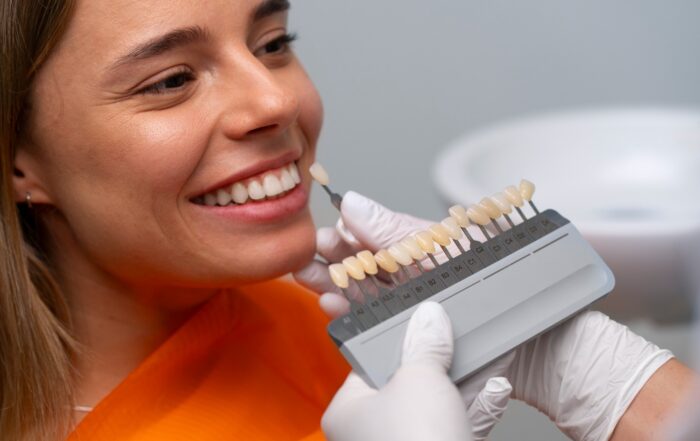
There are two standard procedures that can improve the appearance of your teeth: veneers and composite bonding. While both options address similar cosmetic concerns, such as chips or discoloration, they differ significantly in material, longevity, cost, and the treatment process itself. Understanding these differences may help you to select the appropriate procedure. Additionally, a cosmetic dentist can provide personalized guidance tailored to your dental anatomy and desired outcomes.
Porcelain Veneers and Composite Bonding
Veneers are thin, custom-made shells that cover the front surface of teeth. They are typically fabricated in a dental laboratory from porcelain or a composite resin. The primary purpose of a veneer is to significantly alter the color, shape, size, or length of teeth. The dentist prepares the natural tooth by removing a small amount of enamel to ensure a flush fit.
In composite bonding, the cosmetic dentist applies a tooth-colored composite to the tooth, then sculpts and shapes it to correct imperfections. The dentist hardens the resin with a special light, which bonds the material to the tooth to restore or improve its appearance. Bonding is often used for smaller-scale changes, such as repairing a chipped tooth or closing small gaps.
Material and Durability
Porcelain veneers are strong and durable, and they are highly resistant to staining from substances such as coffee. With proper oral hygiene and regular dental check-ups, porcelain veneers can last for 10 to 15 years on average. Composite resin veneers are less durable and MAY require replacement or repair sooner than porcelain because they are more susceptible to chipping and staining over time.
Composite bonding utilizes a resin material that changes the teeth’s appearance and cover stains. The lifespan of composite resin is shorter than porcelain, and which it may be retouched or replaced. Professional cleanings and regular brushing help maintain its appearance over time.
Aesthetic Results
Porcelain veneers have light-reflecting properties that closely mimic the translucency of natural tooth enamel. Because they are custom-fabricated in a lab based on impressions of your teeth, porcelain veneers can also look more seamless. The non-porous surface of porcelain ensures the color remains stable for the life of the veneer.
Composite bonding can achieve excellent aesthetic results when applied by a skilled dentist. The material is less translucent than porcelain, so it MAY appear less natural upon close inspection. While the resin initially matches the color of the surrounding teeth, it can be more prone to discoloration over time. If you see a noticeable difference in the color of the composite resin, you can schedule a touch-up appointment with your dentist.
Learn More About Cosmetic Dentistry
The choice between veneers and composite bonding depends on individual goals, budget, and the specific dental issues being addressed. Veneers provide a durable, natural-looking solution for smile makeovers, while composite bonding offers a quicker and often more cost-effective fix for minor imperfections. A cosmetic dentist can evaluate your oral health and discuss your aesthetic objectives to help you choose a procedure that is a good fit for you. Consult a dental professional to determine which option aligns with your needs.
- Enhancing Customer Experience with Data-Driven Marketing: Trends, Benefits, and Real-World Success
- How Can Hair Restoration Help Me?
- The Connection Between Dentistry and Overall Health
- What Are the Differences Between Veneers and Composite Bonding?
- Is Best SMM Panel Safe to Use? Truth You Should Know